A STRUCTURAL BREAK IS UNDERWAY
Research is no longer being read.
For decades, investment research operated within a stable system. Analysts published reports. Clients read them. Attribution was clear. Entitlements were enforced. Producers understood what was being consumed, by whom, and with what impact.
That system is breaking.
Artificial intelligence does not just enhance research workflows - it fundamentally changes how research is consumed. Reports are no longer being read. They are being ingested, distilled, summarized, decomposed, and recombined into answers that bear no trace of the analyst, the institution, or the accountability structure that produced them.
In this structural AI transformation, the foundations of the research ecosystem are eroding.
This affects both sides of the research relationship. For producers, attribution disappears and feedback goes dark. For consumers, the provenance of AI-generated answers becomes unverifiable, and entitlement compliance becomes unauditable. BlueMatrix has proposed the Research Provenance Standard (RPS) to address all three failure points simultaneously.
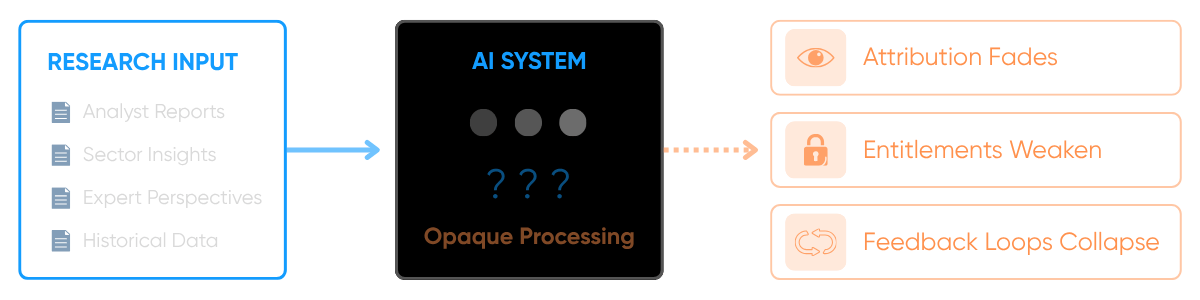
Exhibit 1: The Black Box Problem in Investment Research | Read More →
1. Attribution
When the answer obscures the analyst.
Attribution fades when the analyst and originating institution disappear from downstream outputs, eroding the commercial logic that funds sell-side research in the first place.
When a buy-side AI synthesizes a view from multiple research sources and presents it as an answer, the analyst is not named. The institution is not credited. The accountability structure is invisible.
This is not a matter of professional recognition. Attribution is the mechanism by which the research ecosystem sustains itself commercially. When output becomes unattributable, the rationale for investing in differentiated research weakens - quietly, and at scale.
Read: Who Owns the Answer? →
2. Entitlement
When access controls stop at the document.
Entitlements weaken once content enters AI systems. Traditional access controls lose meaning at the moment of ingestion. Sell-side firms cannot enforce terms that were written for document delivery. Buy-side compliance teams cannot demonstrate that AI consumption occurred within agreed parameters. Both sides are exposed.
Entitlement frameworks were built for a world of documents. Once research is ingested into a buy-side AI system, the controls that governed its delivery no longer apply to its use. Most distribution agreements were written before retrieval-augmented generation (RAG), fine-tuning, or model grounding existed as concepts.
The result is a structural gap between what was agreed and what is now happening - a gap that widens as AI consumption becomes more prevalent and more capable.
3. Feedback
When consumption becomes invisible.
Feedback loops collapse, producers lose visibility into how their research is used and valued, and sales teams lose the engagement signals that drive client conversations.
When a buy-side model retrieves and synthesizes research, no signal is returned to the producer. The research department does not know that a specific report was queried, which components drove the response, or which firm made the query.
The feedback loop that connected production to consumption - however imperfect in the document era - is broken. Coverage decisions become less informed. The connection between what is produced and what is valued becomes opaque.
What the AI consumption layer requires is a foundation built for machine interaction from the ground up. One that can:
 Preserve Attribution
So research remains linked to its origin even as it is transformed, summarized, and recombined. This starts at creation - embedded in Creator as structured metadata.
 Enforce Entitlements
Extending access control beyond documents to queries, extractions, and downstream outputs. Consumption governance lives in the API layer - see BlueMatrixLive.
 Restore Feedback Loops
Providing visibility into how research is actually used inside AI systems. Street Context extends engagement intelligence into the AI layer.
 Enable Structured Access
Allowing research to be consumed as data, not just distributed as files - across every channel, branded through Portal, or delivered via API.
THE BLUEMATRIX PROPOSAL
The Research Provenance Standard: Five principles, one framework, built for both sides.
The Research Provenance Standard (RPS) is BlueMatrix's proposed industry framework defining how sell-side research enters buy-side AI systems - and on what terms. It extends the BlueMatrix XML schema with five governance elements that serve both sides of the research relationship simultaneously.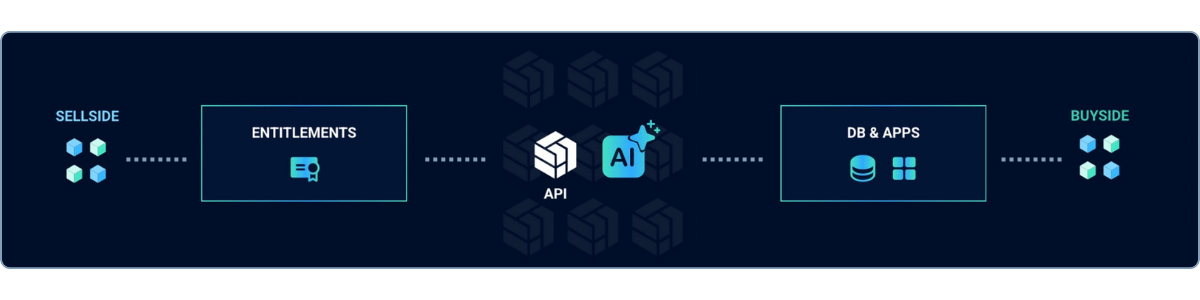
Exhibit 2: The AI Governance Layer
The architectural patterns are already established.
1. Structured Delivery — Research enters AI as typed XML components, not PDFs. Every element: synopsis, key points, body text, boilerplate, is individually addressable and machine-readable.
2. Declared Rights — Machine-readable entitlement declarations on every component. Sell-side firms set permissions (RAG, summarization, derived output) at the document and component level. No declaration = no rights granted.
3. Persistent Attribution — Research DNA which embeds analyst identity, institution, publication date, and a cryptographic hash. The signature travels with derived AI content - the analyst's name doesn't disappear when a PM's AI synthesizes an answer.
4. Provenance Chain — An immutable, append-only audit log from publication through every AI retrieval event. A compliance team can reconstruct the full chain of custody from the analyst's original note to the moment the AI answer was produced.
5. Measured Consumption — AI-driven consumption metrics provides a live endpoint where every AI query is logged - which firm, which component, which use type, and returned to the publisher under agreed terms. Producers get their feedback loop back. Buy-side teams get an auditable consumption record.
The architectural patterns are already established.
The Coalition for Content Provenance and Authenticity (C2PA) has defined how images and video carry verifiable origin metadata through downstream systems. The Open Digital Rights Language (ODRL) has standardized how rights and permissions can be expressed in machine-readable form. W3C's Verifiable Credentials govern how identity claims travel across systems without re-validation. Each of these solved the same underlying problem in a different domain: how to attach durable, enforceable technological governance to content that moves through systems no single party controls.
Investment research needs the same architecture. It does not yet have it.
Our strategic vision is not to put restrictions on AI consumption. It is to implement the framework that makes governed AI consumption possible, on terms that preserve the research ecosystem rather than quietly dismantle it.
BlueMatrix sits in the unique position to effectively implement an industry framework that defines how sell-side investment research enters AI systems, and on what terms.
WHY BLUEMATRIX CAN LEAD THIS
27 years at the forefront of structured research.
In May 1999, two technologists looked at how investment research was being produced and saw an architectural problem. Reports were being passed by email, retyped between systems, manually formatted for each destination. The inefficiency was not a matter of working harder. It was a consequence of treating the report as the unit of content - when in fact the report was a container.
The real units were the components inside it: the headline, the thesis, the rating, the price target, the estimates, the disclosures. BlueMatrix was built on a single insight: store the components once, render every format from a single source.
That architecture has run in production for over 27 years. It has served more than a thousand research firms. It has adapted to every shift in distribution technology and regulatory requirement the industry has faced - from print to web, from PDF to HTML5 & mobile, through MiFID II's unbundling, and beyond.
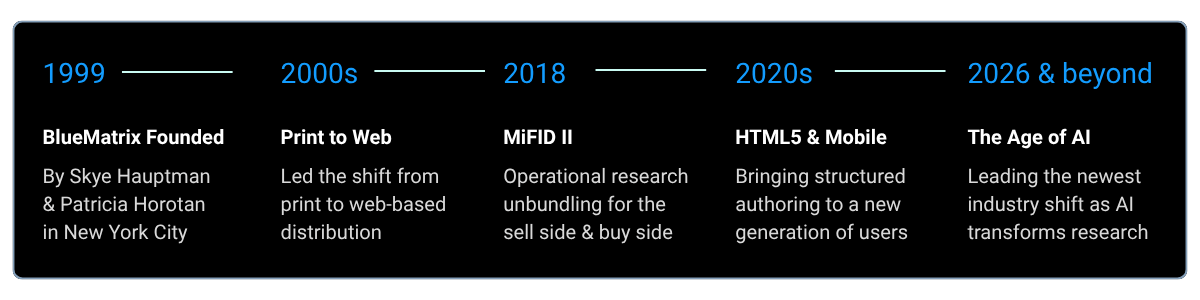 Exhibit 3: BlueMatrix at the Forefront of Industry Shifts | More About BlueMatrix →
The shift that AI introduces is the most recent and significant transformation in the research ecosystem. It is also the one for which BlueMatrix's component-based architecture is uniquely positioned. Why?
Because AI does not consume documents. It consumes components.
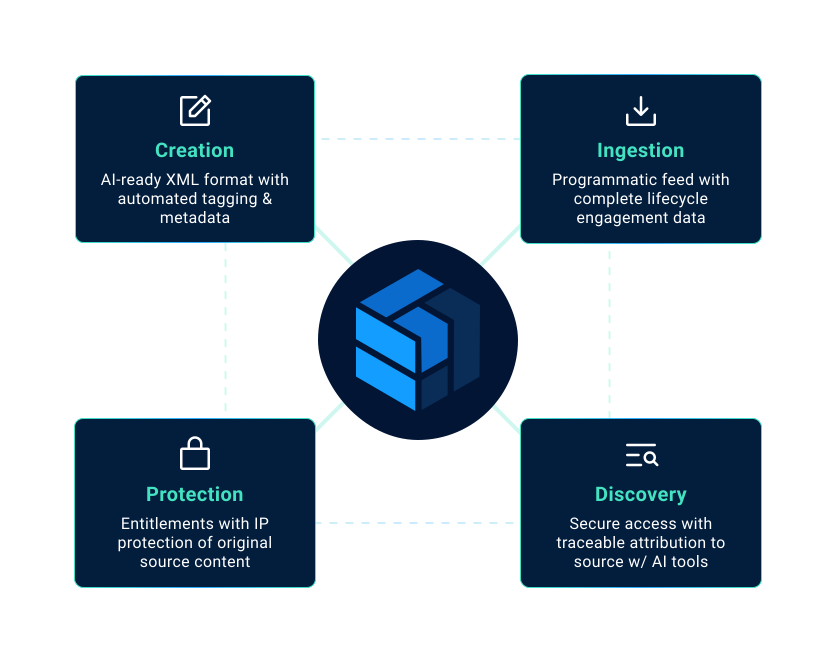
The structured authoring model that has underpinned BlueMatrix since 1999 is the same model that makes AI-ready research possible today: tagged, typed, machine-readable, and individually addressable. The XML schema that has powered structured publishing for over a thousand research firms is the same schema we are extending to govern AI consumption.
The infrastructure to make governed AI consumption possible exists. The technical specification is ready. We are building the reference implementation now.